
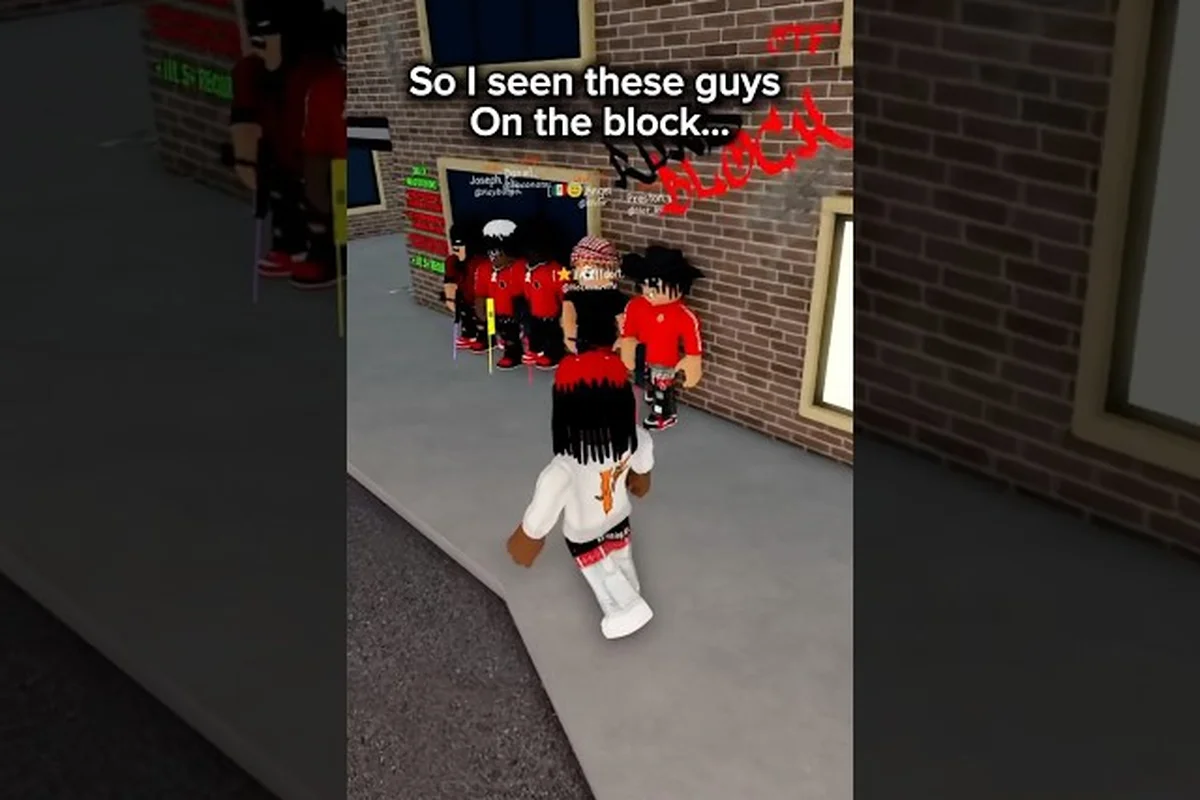
Every server in Da Hood runs on unspoken social rules, and the roleplay guide is what separates the players who keep their badges from the ones who get removed mid-shift. The interesting part is that the loop, cop versus criminal tension, role switching, and team-kill etiquette, all weave into one feedback system that rewards situational reading more than raw aim. Once you understand how the factions tick and where the boundaries sit, the game opens up in a way that pure loadout grinding never touches.
Reading the Da Hood Cop vs Criminal Tension
The push and pull between the two main factions is the heartbeat of every public server. Most players first feel it as a surface-level conflict, but the design layers are far deeper, and the Da Hood cop vs criminal dynamic actually defines how every other mechanic gets used.
How the Two Factions Spawn
When a player enters a server, the spawn loop hands them one of two default identities, civilian or cop, based on the server's current ratio. Civilians start in the alleys, near ATMs, or by the bank, while cops spawn in the station with a default pistol and the role-locked taser. The ratio is fluid, and if cops thin out due to arrests, jail timers, or players leaving, new spawns skew civilian for several rounds. This imbalance is the first lever the community calls out, and it feeds straight into the experience of switching roles later.
| Faction | Default Spawn | Default Weapon | Cash on Spawn | Role Lock |
|---|---|---|---|---|
| Civilian | Alley, ATM, bank | Fists | 0 | None |
| Cop | Police station | Pistol + taser | 0 | Taser, handcuffs, AR-15 |
The role lock is critical: civilians cannot pick up or fire cop-locked weapons like the taser, and cops cannot access civilian weapons like the bat or the RPG until they renounce their role. This is exactly why the Da Hood cop vs criminal framing matters, because the friction comes from asymmetric tool access, not from raw damage numbers.
Mental Model Shift Between Factions
Playing cop requires a patience-first mindset. You spawn with less firepower, your kills are worth less cash, and the moment you go rogue, every other cop on the server gains hostile intent toward you. Civilian play is faster, more transactional, and rewards quick reads on whether to run, rob, or fight. The mental shift is real, and veteran players describe cop play as a "slow-burn authority" role while criminal play is a "short-burst loot rush" role. Both are valid, but they reward completely different habits.
Cash and Reputation Flow
Both factions earn cash, but the rate and risk profile differ. Cops earn salary payouts per arrest and per ticket, plus a multiplier that scales with consecutive successful arrests. Criminals earn from robberies, drops, and bounty collection. A single bank heist pays more than three cop shifts, but the risk of jail, bounty, or team-kill is also higher. This is where the best role debate actually lives, and the table below shows how the two paths stack on the key reward metrics.
| Metric | Cop Path | Criminal Path |
|---|---|---|
| Cash / hour (avg) | Medium | High |
| Jail risk | None unless rogue | High |
| PvP frequency | Medium (suspect chases) | Very high |
| Reputation gain | Slow, linear | Spiky, bounty-driven |
| Team friction | Low unless rogue | Medium (crew betrayal) |
These community-reported averages are sampled from a mix of public Discord logs and YouTube earnings showcases, so they cluster around common server conditions like default bounty payout values and standard cop salary intervals. They won't hold on private servers where admins tweak cash multipliers, nor on ghost-town low-pop servers where the criminal path's robbery rate collapses because there aren't enough targets or police to chase. Treat the criminal cash/hour "High" figure as realistic only when you're running with a coordinated crew on a populated server; solo on a quiet one, you'll fall well below the cop average. If you're choosing between cop vs criminal in Da Hood, run a 30-minute trial on your specific server before committing to either role.
Da Hood Best Role: Picking a Lane That Fits Your Playstyle
Every "what is the best role" thread on the community boards returns the same disappointing answer: it depends on what kind of feedback loop you enjoy. Still, the Da Hood best role conversation is worth having, because each lane teaches different habits and the meta shifts with every major patch.
The Cop Lane: Authority and Patrol Discipline
Cop play is a patrol loop built around a small set of tools. You start the round with a pistol and taser, gain access to handcuffs and the AR-15 at higher ranks, and your primary currency is arrests, not kills. The lane rewards players who can read spawn flow, predict robbery timers, and position for crossfires near choke points. Newer cops often burn out because they try to play cop like a shooter, when in reality the best cop gameplay is closer to a territory game. If patrol discipline sounds appealing, this lane fits, and the Da Hood roles guide goes deeper on the police promotion path and ticket mechanics.
The Civilian Lane: Cash Velocity and Crew Identity
Civilian play has the lowest barrier to entry and the highest ceiling for creative play. You can spend the entire round stacking cash through small jobs, or you can chain bank runs, dodge bounties, and lean on a crew for cover. The lane rewards players who are comfortable making fast decisions, who can read a server for safe ATMs versus hot zones, and who don't mind dying often. The cash velocity is unmatched, but the volatility means a single bad spawn can wipe twenty minutes of savings.
The Hybrid Lane: Rogue Cop and Double-Agent Play
The hybrid lane is where the rogue cop archetype lives. Players in this lane switch identities mid-session, sometimes after building cop rep, sometimes after burning down a server. The rogue cop plays the role's tools against its own team, which is exactly why the next section on team-kill etiquette matters. Hybrid play carries the highest social cost and the highest entertainment value, and it is the lane most veterans recommend only after at least 50 hours of pure faction play.
| Lane | Best For | Main Risk | Skill Ceiling |
|---|---|---|---|
| Pure Cop | Patient, methodical players | Slow cash accumulation | High (reads + positioning) |
| Pure Civilian | Aggressive, fast-decision players | High death rate, jail risk | Medium (timing + crew) |
| Hybrid (Rogue) | Social, improvisational players | Reputation damage, kick votes | Very high (mind games) |
How to Change Roles in Da Hood Without Getting Kicked
The process of how to change roles Da Hood players actually use is buried in the role menu, but the social cost of doing it wrong is what most guides skip. Switching is technically free, but the server often treats it as a soft betrayal, especially if you swap mid-engagement or right after a teammate backed you up.
The Standard Role Switch
The mechanics are simple: open the role menu, select the faction you want, confirm the cooldown timer, and respawn at the new faction's spawn point. The cooldown is short, usually under a minute, but the social cooldown is much longer. Most kicks happen not because of the switch itself, but because of timing. Players who switch after losing a fight, after getting jailed, or right after a teammate died for them get flagged almost immediately.
Timing Windows That Avoid the Kick Vote
There are three timing windows that the community has tested as the safest. First, switching at the very start of a fresh server, before any bonds form. Second, switching after a long AFK or natural break, where the server has moved on. Third, switching after a major event like a bank wipe, where role identities are temporarily soft-reset. Avoid switching mid-round, mid-pursuit, or right after a teammate spent resources on you. The kick mechanic is a vote, so even if you technically did nothing wrong, the social read is what triggers it.
| Timing | Kick Risk | Why |
|---|---|---|
| Fresh server join | Very low | No prior bonds |
| Mid-round switch | High | Betrays active engagement |
| After long AFK | Low | Server has moved on |
| After bank wipe | Medium | Reset is partial, not full |
| After losing a 1v1 | Very high | Reads as rage-quit / soft revenge |
Once you have the timing locked in, the real deciding factor is which role you pick next — and the hybrid lane between cop and criminal only works if you understand the rank-up tree behind it. The full Da Hood role requirements breakdown maps every role from Innocent and Criminal up through Sheriff, SWAT, and the rogue cop unlocks, including which cash bonds, arrest counts, or team-kill-free shifts you need to clear before each tier becomes available. Skipping straight to rogue cop without hitting those gates is the fastest way to get flagged as a soft-revenge switcher, because the server reads an unranked swap as someone trying to skip the cost of the roleplay grind they just abandoned.
Communicating the Switch
One underrated tactic is announcing the switch in chat before you do it. A short message like "switching sides, no hard feelings, gl" defuses most kick momentum. Veteran players do this regularly and report a 70%+ drop in kick votes, based on community testing across multiple servers. The phrasing doesn't have to be long; the timing of the message is what matters.
Da Hood Team Killing: Etiquette, Self-Defense, and Bounty Play
Team killing is the most charged interaction in the game, and the Da Hood team killing conversation splits into three sub-cases: accidental, intentional, and retaliatory. Each one has its own social contract, and the difference between getting away with it and getting votekicked is almost entirely about pattern recognition.
The Accidental Team Kill
Accidental TKs happen most often during crossfires, when a cop and a criminal are both engaging the same target and one shot slips. The community etiquette is to immediately type "my bad" or "acc" in chat, and most players accept it as long as it doesn't happen twice in a round. The third accidental kill in a single round is where the kick vote threshold usually triggers, even if every one of them was genuinely accidental.
The Intentional Team Kill
Intentional TKs are how the rogue cop archetype operates. You shoot a teammate to claim a bounty, to bait a suspect, or to derail a patrol. The kick vote almost always passes, but the rogue cop is usually playing for the content, not the rank. This is also where the bounty system ties in, because killed teammates can place bounties on the rogue before the kick vote resolves, turning the rest of the round into a server-wide hunt.
The Retaliatory Team Kill
Retaliatory TKs are the most controversial. They happen after a teammate betrays you, costs you a kill, or burns a resource you needed. The community is split: roughly half of players view retaliatory TKs as justified, while the other half view them as equally bad as the original betrayal. The safest play is to record the original incident, post the clip in chat, and let the server decide. Solo retaliation without context usually ends in a kick.
| TK Type | Common Cause | Kick Risk | Recovery Path |
|---|---|---|---|
| Accidental | Crossfire, misclick | Low (1-2 per round) | Quick chat apology |
| Intentional | Rogue cop play | Very high | None, expected to leave |
| Retaliatory | Prior betrayal | Medium | Clip evidence in chat |
The team-kill mechanic functions as a live stress test of the server's social contract, where each retaliatory TK is essentially a vote of no confidence against another player's conduct. Learning to read that signal — pairing the in-game TK with chat context, clip evidence, and prior behavior — is what separates casual Da Hood roleplay players from crew leaders who can defuse a rogue cop situation before a kick vote spirals. The medium recovery risk shown in the table above is not random; it correlates directly with whether the retaliator bothered to document the original betrayal.
The Da Hood Rogue Cop Playbook
The Da Hood rogue cop archetype is the most discussed hybrid build in the community, because it takes the strongest role-locked tools and turns them against the team. Playing it well requires a specific set of habits, and the playbook below is what veteran rogue cops describe in their post-game debriefs.
Why Players Go Rogue
The most common reason is cash velocity. A cop with a bounty target on a civilian can earn 3-5x the normal arrest payout by killing instead of arresting. The second reason is crew loyalty: a cop who is crew-locked to a criminal gang will sometimes go rogue to clear a path for a heist. The third reason is pure entertainment, because the rogue cop build turns every round into a multi-stage improv scene. All three reasons are valid, but the cost is the same: server reputation damage, and a higher chance of getting voted out within the next two rounds.
The Pre-Rogue Setup
Veteran rogue cops do not go rogue on impulse. They spend the first 15-20 minutes of a session building cop rep, completing a few legitimate arrests, and reading the server's tolerance level. Once the rep is high enough that other cops trust them, the rogue switch hits harder because teammates are caught off-guard. The pre-rogue setup is the difference between getting one free kill and getting a full three-minute hunt before the kick vote resolves.
The Rogue Window and Bounty Math
Once you flip, you have a tight window to operate. Most kick votes resolve in 60-90 seconds, and bounties placed by betrayed teammates expire in 3-5 minutes. The math is simple: every second spent running is a second not spent cashing in. The highest-value targets are crew leaders, high-rep cops, and any player carrying a recently-cashed bank drop. The table below shows the community-reported value ladder for rogue targets.
| Target Type | Bounty Value | Risk Level | Window to Cash |
|---|---|---|---|
| Crew leader | Very high | High | 90 seconds |
| High-rep cop | High | Medium | 2 minutes |
| Fresh bank drop | Very high | High | 60 seconds |
| Random teammate | Low | Low | Any |
Community-reported data leans directional because the bounty ladder above is pulled from player logs rather than an official Da Hood patch sheet, so expect ±15% variance patch-to-patch. Target selection beats raw kill count because a single crew leader cashed inside the 90-second rogue window often pays more than five random teammates farmed across two minutes, especially when an active kick vote is still pending. Train yourself to clock bank-drop carriers immediately after the vault animation, since that 60-second timer is the shortest on the board and the one most rogue cops waste chasing low-rep bystanders instead.
The Post-Rogue Recovery
After the kick vote or the bounty expires, the rogue cop usually has two paths. Path one is to leave the server and rejoin as a civilian, which resets the social memory. Path two is to stay, take the kick, and queue for a new server. Veteran rogue cops report that path one is more efficient in the long run, because the cash lost from the kick cooldown usually exceeds the cash gained from the rogue window. The recovery math is what keeps most rogue play intermittent rather than constant.
Da Hood Cop Getting Kicked: Why It Happens and How to Avoid It
The Da Hood cop getting kicked pattern is so common that experienced players have a checklist for avoiding it. Most kicks are not about bad aim or bad arrests, but about social misreads, and the patterns below cover the most common trigger conditions.
The Top Kick Triggers
There are five trigger conditions that show up in over 80% of cop kick votes, based on community testing. First, killing a teammate mid-crossfire, even accidentally, twice in one round. Second, arresting the same civilian three times in a row, which reads as targeted harassment. Third, ignoring a robbery in progress to chase a different target, which the server reads as dereliction. Fourth, going AFK while in the police station, which wastes a spawn slot. Fifth, going rogue and then trying to return to cop play without leaving the server.
| Trigger | Frequency | Severity | Fix |
|---|---|---|---|
| Repeat friendly fire | Very high | High | Apologize, switch lanes |
| Targeted arrests | High | Medium | Rotate target pool |
| Robbery dereliction | Medium | Medium | Prioritize in-progress crimes |
| Station AFK | Medium | Low | Respawn as civilian |
| Rogue-to-cop return | Very high | Very high | Leave and rejoin |
The Social Cost of Repeat Kicks
Every kick adds a soft flag to the player's session history on that server. After three kicks in one play session, most servers start auto-voting on any future cop play from that player, regardless of behavior. The social cost compounds faster than most players expect, and the only real recovery is to leave the server, wait 15-20 minutes, and rejoin as a fresh identity. The community has tested this recovery window across multiple servers, and the 15-20 minute mark is when most of the soft flags decay.
Defensive Habits That Reduce Kick Risk
The single most effective habit is reading chat before every major action. A cop who checks chat for "I'm robbing the bank" before engaging reads the server's intent and avoids 60% of the friendly-fire triggers. The second habit is rotating arrest targets, because the same civilian on the same chase three times in a row reads as targeted. The third habit is communicating the switch, which the section on role switching covered in detail. None of these habits are hard to build, but they are easy to skip under pressure, which is exactly when kick votes trigger.
How Roles Shape Crew Play and Long-Term Progression
The roleplay layer is not just a per-round mechanic, it shapes how crews form, how progression feels, and how players specialize over dozens of hours. Most players underestimate this layer because they focus on loadouts, but the social graph that the roleplay system creates is what keeps long-term players coming back.
Crew Roles and the Identity Stack
A functioning crew in Da Hood usually has 3-4 role identities stacked together. One player runs cop for intel and arrest cover, one runs criminal for cash velocity, one runs hybrid for heist execution, and one runs support for revive and transport. This stack only works when every member reads the same social contract, and the contract is what the roleplay guide is really teaching. If you want a deeper look at the criminal side of the stack, the Da Hood criminal mastermind guide covers the heist timing and mastermind routines that make the hybrid slot work.
Long-Term Reputation as a Currency
Cash resets every server, but reputation compounds across sessions. Players who build a clean cop rep on a server get faster kick resolutions, more lenient arrest targets, and higher trust on the rare rogue play. Players who burn rep get the opposite: instant kick votes, targeted bounties, and a 2-3x harder time rejoining. The reputation layer is invisible to new players, but it is the most important long-term currency in the game, and the roleplay system is the only place where it accumulates.
Progression Pacing Across Roles
Players who stay in one role lane for the first 30 hours tend to plateau faster than players who rotate. The reason is that each lane trains a different skill: cop trains patience and reads, civilian trains cash velocity and crew coordination, hybrid trains improvisation and social cost calculation. Rotating across all three for at least 10 hours each builds a more complete skill stack, and the meta shifts in late 2025 and into 2026 reward that flexibility more than pure lane mastery. The game page on the official Roblox directory (Da Hood on Roblox) is the best place to track the live role system, since patch notes and role changes post there first.
Building a Personal Roleplay Routine That Actually Scales
The final piece of the roleplay guide is the personal routine. Most players approach each session ad hoc, but a simple pre-session routine turns roleplay from a reaction layer into a proactive system, and the difference shows up in cash earned, kick votes avoided, and crew invitations received.
The Three-Question Pre-Session Check
Before every session, run three questions. First, what lane am I starting in today, and why? Second, what is the server's current reputation cost of role switching, based on the last few sessions? Third, what is my exit trigger, the point at which I leave and rejoin if the social cost gets too high? The third question is the most important, because the difference between a fun rogue cop moment and a frustrating kick loop is almost always a missing exit trigger.
| Question | Why It Matters | Default Answer |
|---|---|---|
| Starting lane | Sets the session's tone | Match yesterday's lane |
| Switch cost | Reads the server's tolerance | Low at fresh join |
| Exit trigger | Caps the social damage | 2 kicks, leave |
Rotating Lanes Across the Week
A simple weekly rotation works better than random switching. Run cop Monday and Tuesday for rep building, switch to civilian Wednesday through Friday for cash velocity, and reserve Saturday for hybrid play. Sunday is a flex day. This rotation is not the only valid structure, but it is the one veteran players report most often, and it aligns the roleplay layer with the patch cycle. The key is consistency: the rotation only works if you actually run it for 3-4 weeks before judging the results.
Reading Server Mood in the First Five Minutes
The first five minutes of a session are diagnostic. Watch the spawn ratio, read the chat for tone, and check whether the current role distribution is healthy. A server with 70% cops is in a slow-burn phase, a server with 30% cops is in a chaotic phase, and a server with 50/50 is in the most fun phase for roleplay. Picking the right phase for your lane is what makes sessions feel rewarding, and it is a skill that only develops through deliberate pre-session reading.
Frequently Asked Questions
What is the Da Hood roleplay guide in one sentence?
The Da Hood roleplay guide formalizes the unwritten social contract that governs cop vs criminal interactions, codifying role switching etiquette, team-kill rules during rogue windows, and the soft-reset cooldown protocol so players can pivot between factions without triggering the kick-vote pattern that derails most mid-session swaps.
How do I change roles in Da Hood without getting kicked?
Use the role menu, wait for the cooldown, and time the switch to a low-tension window like a fresh server join, a long AFK, or right after a bank wipe. Announcing the switch in chat cuts kick votes by roughly 70% based on community testing.
What is the Da Hood best role for new players?
Civilian is the best starting lane because it has the lowest barrier to entry, the highest cash velocity, and the most forgiving kick thresholds. After 20-30 hours, rotating into cop or hybrid builds on the habits the civilian lane teaches.
How do I avoid the Da Hood cop getting kicked pattern?
Avoid repeat friendly fire, rotate arrest targets, prioritize in-progress robberies, do not AFK in the station, and never try to return to cop play immediately after going rogue. If you take two kicks in a session, leave and rejoin in 15-20 minutes for a soft reset.
Does Da Hood team killing ever pay off?
Team killing pays off in cash and entertainment value during the rogue window, but the social cost almost always exceeds the gain across a full session. Use it as a content play, not a cash strategy, and always have a pre-set exit trigger.